
Beautiful Plants For Your Interior
Beautiful Plants For Your Interior


Ever heard gardeners talking about the “Chelsea Chop” and felt a bit left out? It sounds dramatic, maybe even a little scary. But what if I told you it’s one of the easiest ways to get stronger plants, more flowers, and a longer blooming season in your UK garden?
You don’t need to be a pro to master this technique. In this simple guide, I’ll walk you through exactly what the Chelsea Chop is, when to do it, and how to perform it with confidence.
Let’s get chopping!
The Chelsea Chop is a simple pruning technique used on late-flowering herbaceous perennials. You are simply cutting back the top growth of the plant by about one-third to one-half.
It gets its name from the famous RHS Chelsea Flower Show because the technique is traditionally carried out in late May, right around the time of the show.
It might feel wrong to cut back a perfectly happy plant, but the rewards are huge:
1. More Flowers, Bushier Plants: When you remove the main growing tip, the plant is forced to produce new side shoots from lower down the stem. Each of these new shoots will produce a flower, effectively doubling your bloom count and creating a much bushier, more attractive plant.
2. Sturdier Stems (No More Flopping!): Plants like Sedum and Phlox can get tall and leggy, often flopping over in the first summer rain or wind. The Chelsea Chop makes the plant more compact and creates a stronger framework of stems that can support itself. Say goodbye to staking!
3. Staggered Flowering: You can get creative! By chopping only the front half of a large clump of perennials, the chopped section will flower a few weeks later than the un-chopped back section. This extends the flowering season of a single plant, giving you more colour for longer.
This is the most critical part: timing. In the UK, the perfect window for the Chelsea Chop is from the last week of May to the third week of June.
Do it too early, and the plant might not have enough energy. Do it too late, and you risk the plant not having enough time to produce flowers before the end of the season.
Ready? All you need is a clean, sharp pair of secateurs.
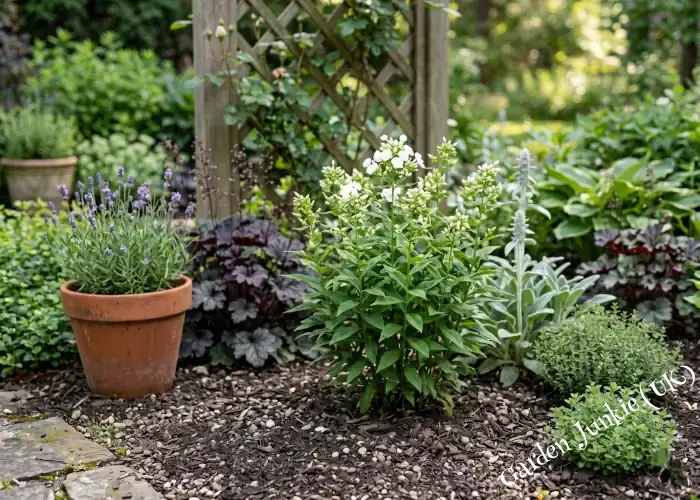
Step 1: Identify Your Plant. First, make sure the plant is a good candidate for the chop (see our list below). Look for a perennial that is about a foot tall with lots of new, soft growth.
Step 2: Decide on Your Cut. Look at the plant and decide how much you want to take off. For most plants, cutting back by one-third is a good start. If you have a plant that always flops, you can be bolder and take off up to half.
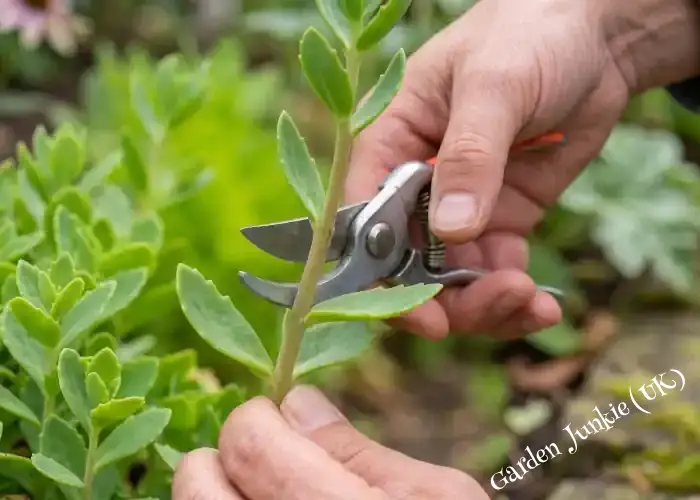
Step 3: Make the Cut. Take your secateurs and, one stem at a time, make a clean cut just above a leaf node (the point where a pair of leaves emerges from the stem). Cutting here encourages the plant to branch out neatly from this point. Work your way around the entire plant, cutting all the stems to a similar height.
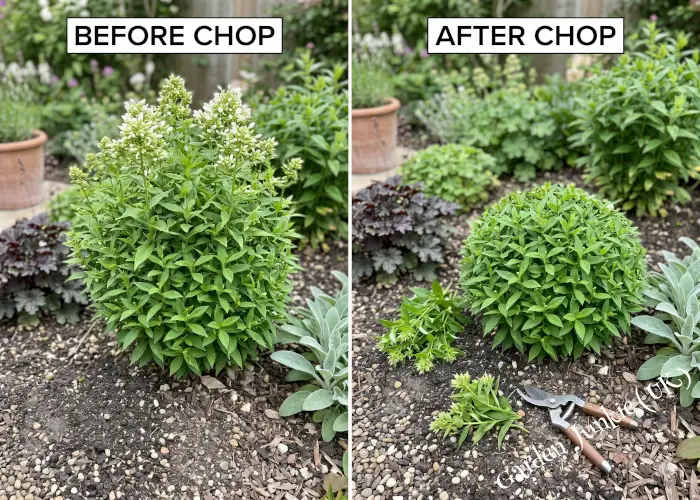
Step 4: Water and Wait. Your plant will look a bit sorry for itself for a few days. This is normal! Give it a good watering after you’ve finished, and that’s it. Within a week or two, you’ll see new shoots appearing, and the plant will start to fill out.
This technique works brilliantly on late-summer flowering perennials that tend to get leggy.
Do NOT perform the Chelsea Chop on:
It’s highly unlikely! These are tough plants. As long as you stick to the “Yes” list and do it at the right time, you’ll be fine
Don’t waste them! The soft tip cuttings of plants like Sedum and Phlox can often be rooted in a pot of gritty compost to make brand new plants for free.
Not at all! Try the “staggered flowering” technique by only chopping the front half of a large clump.
So there you have it – the Chelsea Chop isn’t so daunting after all! By making a few simple cuts in late spring, you’re not just tidying up; you’re setting the stage for a stronger, healthier plant that will reward you with a spectacular, long-lasting floral display.